A few months ago, I had an idea of how I could integrate Typst into some of the work I do. I started toying around with integrating some useful tools, adding photos, handling variable data, serving documents. As I continued on, I realized that I was creating something others might find useful.
Introducing AMjuno - a Typst workbench
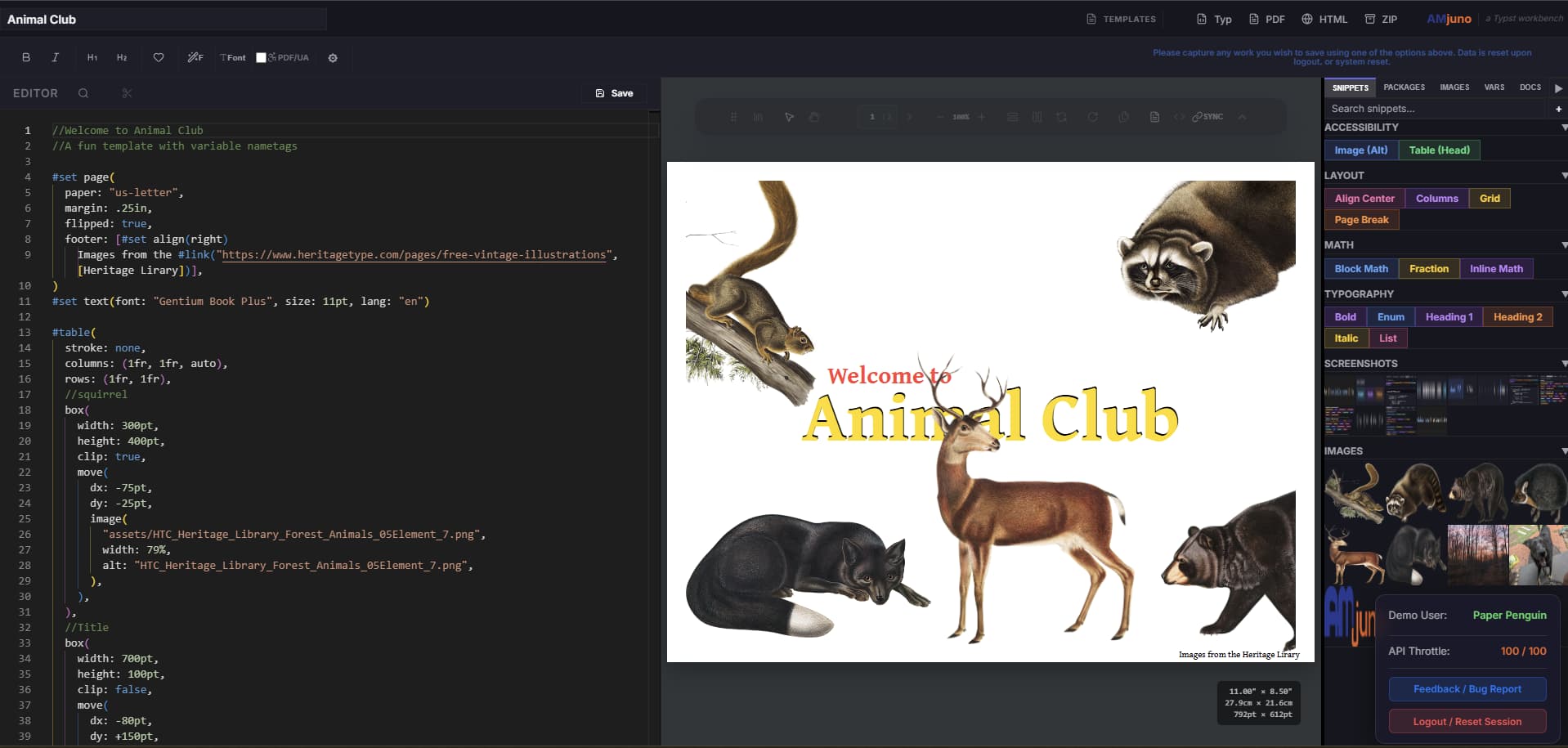
Key Features
- Visual Typst Editor: Real-time preview with Monaco-based code editing.
- Asset Management: Image upload and management. (disabled in demo
 )
) - Function Toolkit: One-click snippet insertion for common layouts (Tables, Grids, Headers).
- Package Manager: Browse and import packages from the Typst Universe (@preview/).
- Variable Binding: Define variables (JSON) for dynamic template generation.
- REST API: Full programmatic access for template management and document generation.
- PDF/UA Support: Built-in support for accessible PDF generation.
- Self-Contained: Backend compiles Typst in-memory (no external CLI required).
Right now, it is set up in a beta-demo mode, with some limitations. Once there are a few more refinements, the plans are to release - online accounts, and a standalone app and open source version, which can be used as a private server or enhanced by you.
Please feel free to offer feedback, here or on website. I’m looking forward to meeting you and being a part of this amazing, growing community!