I’ve seen post about the order of precedence of show-set rules, but here all show rules act on the same element.
I do not understand what happens in the following case:
#show heading.where(level: 1): set heading(numbering: "A.")
#show outline: set heading(numbering: "(i)")
#outline()
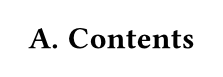
In this case (at least in typst v0.15.1) the outline title header will be numbered like “A.”
And the ordering of show-set rules seem to not matter, i.e.
#show outline: set heading(numbering: "(i)")
#show heading.where(level: 1): set heading(numbering: "A.")
#outline()
has the same result.
So it appears to me that the heading.where(level: 1) show-set rule always applies last.
Is this the intended behaviour? If so how would one set the heading numbering for the outline title is level 1 heading have already been set?
I’m not sure my mental model aligns with the source code, but so far it has held up to reality.
I think of:
#show heading.where(level: 1): set heading(numbering: "A.")
#show outline: set heading(numbering: "(i)")
as simply inserting or changing an existing set rule inside of outline, something to this pseudocode:
// outline element:
[
  // default set rules for the outline
  ...
  #set heading(numbering: "(i)") // <- show outline: set heading(...)

  #heading([Contents]) // <- show heading.where(level: 1): set heading(...)
  // the rest of the outline content
  ...
]
set heading(numbering: "(i)") is a general set rule nested inside outline. The show-set rule on heading takes precedence as it acts directly on the heading element.
IMO this is intended behaviour. You can set the heading numbering inside of outline with:
#show outline: it => {
  show heading.where(level: 1): set heading(numbering: "(i)")
  it
}
(I hope my mental model description is understandable )
 )
)