I realize this avoids actually answering the question, but in your example f(n) is never displayed. It being written in Typst’s math notation is only important to the author. The reason I mention it is because there already exists a tool available to the author for computing such things: code mode.
Taking this idea even further, a system could be created that would collect display and calculation capabilities into one variable:
#let create-pair(short, full, code) = (
  short: short(),
  full: full,
  code: code,
  evaluate: (n) => [#short(n: n)$= #code(n)$]  //Display inline and the result
)

#let custom-sum = create-pair(
  (n: $n$) => $sum_(k=0)^#n k$, //Function to display inline math
  $ sum_(k=0)^n k               //Plain block math
    &= 1 + ... + n \
    &= (n(n+1)) / 2 $,
  (n) => {(n * (n + 1)) / 2}    //Function to calculate the result (code mode)
)

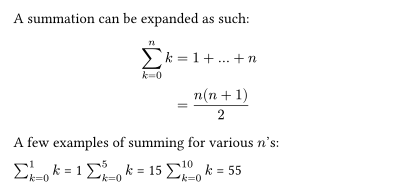
A summation can be expanded as such:
#custom-sum.full

A few examples of summing for various $n$'s:

#(custom-sum.evaluate)(1)
#(custom-sum.evaluate)(5)
#(custom-sum.evaluate)(10)
I will throw Jlyfish in here as well. And depending on what you need, may typstry could be of interest. I am sure that python based packages are available too, I simply prefer Julia.
This may not be exactly what you need, but maybe it helps you find other solutions as well.
Keep in mind that Jlyfish won’t work with the web app and Typstry is a Julia package. Things like Quatro/jupyter or Pluto may be of interest here as well, those are the inverse of Jlyfish in their idea