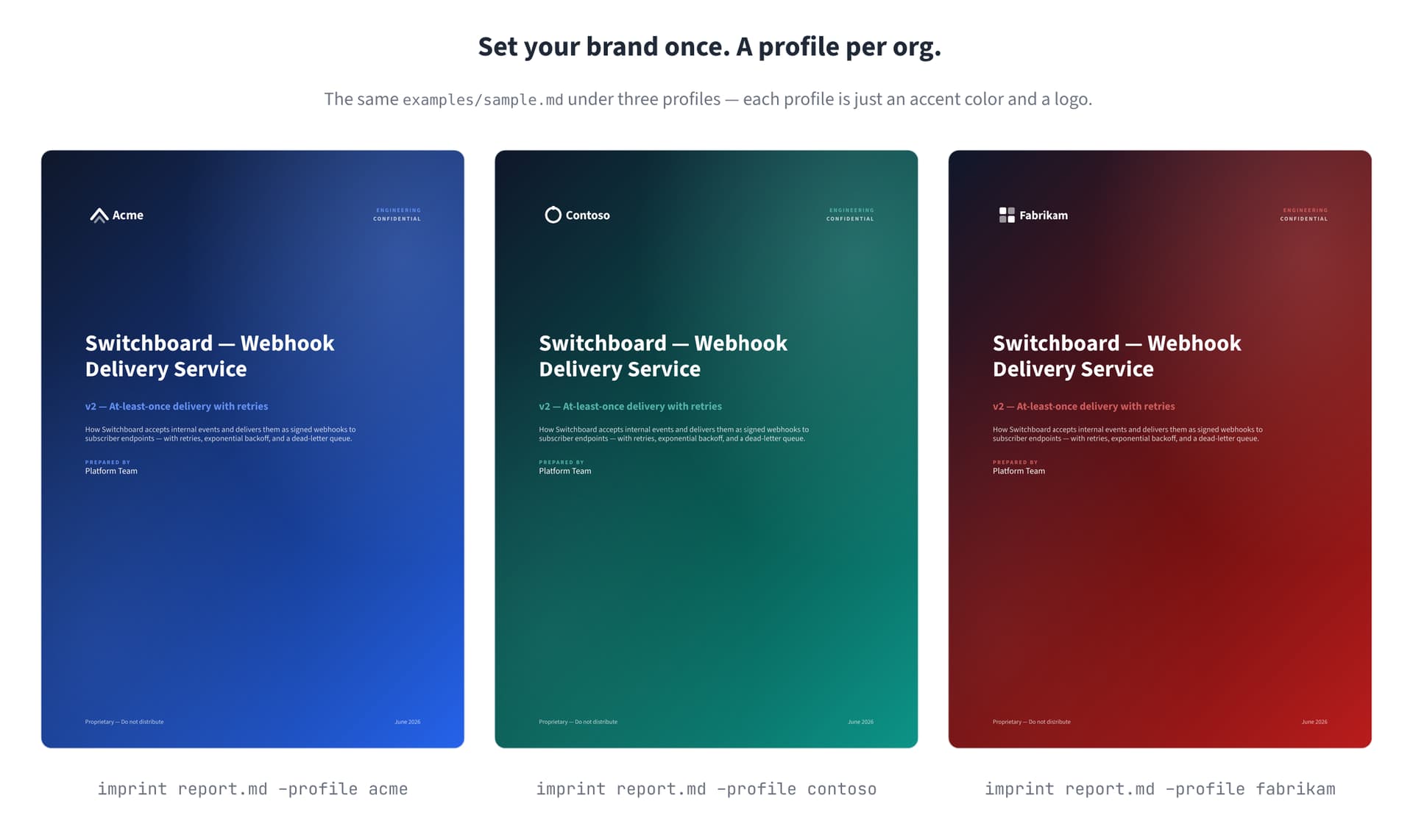
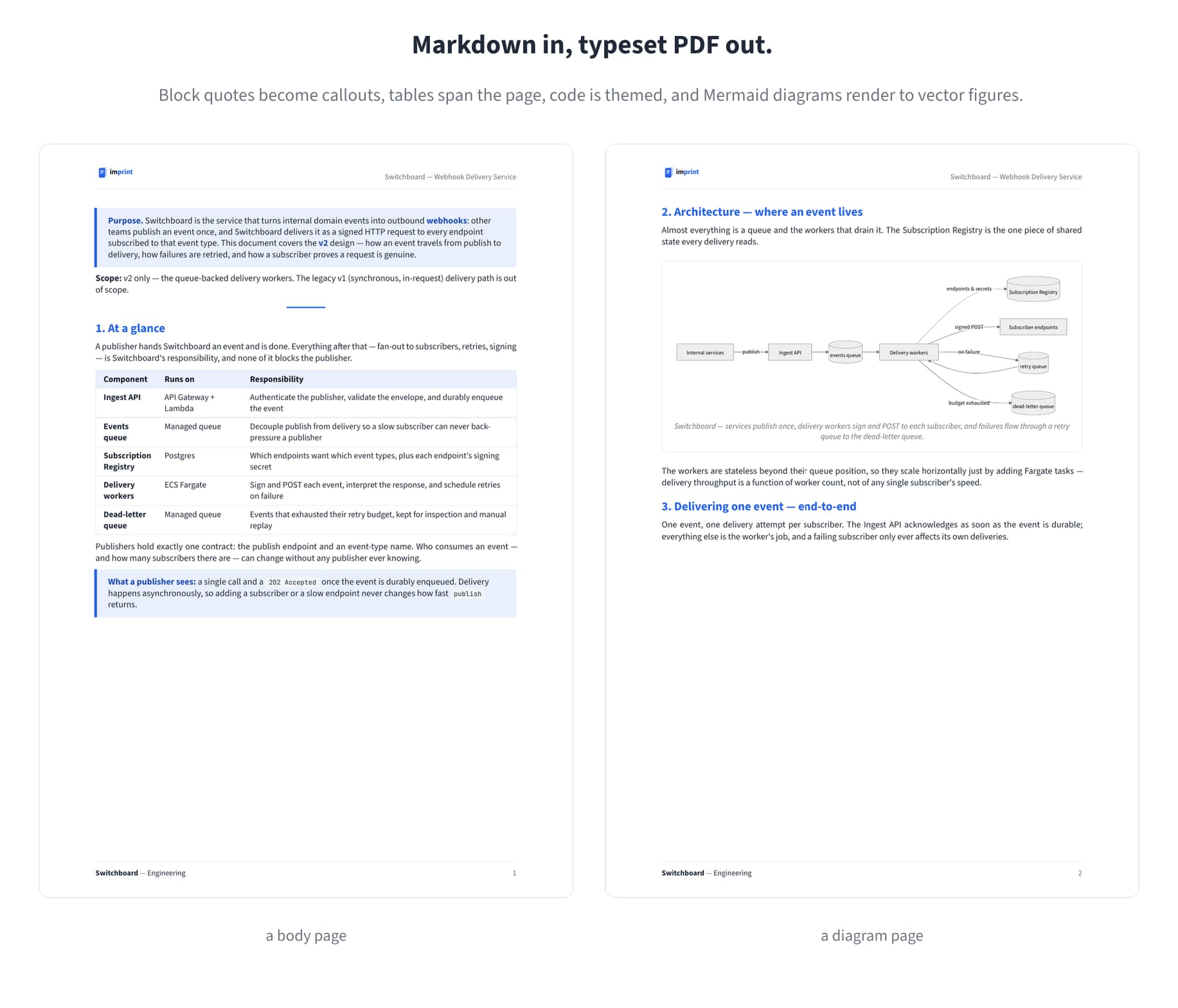
I built imprint, a small CLI that turns a Markdown file into a branded, typeset PDF — the kind of spec / design-doc / report that needs to look official. Typst is the typesetting backend (via pandoc -t typst → a custom Typst template → typst compile), and moving off a LaTeX-based approach is what made it fast and genuinely reproducible.
What it does:
- Reusable house style — set your accent, fonts, and logo once in a config file; every document inherits it. Keep one config per org as a profile and switch with
--profile. A document overrides only what it needs in its front matter. - Cover or masthead, a running header/footer, an optional gradient cover, block-quote callouts, and
```mermaidblocks rendered to SVG figures. - Deterministic — fonts are bundled and embedded,
--ignore-system-fontsso the machine’s fonts can never leak in, and I pinSOURCE_DATE_EPOCHso the PDF timestamp doesn’t drift; same input → same bytes. - Optional TOC + heading numbering, both off by default so output stays 1:1 with the source Markdown.
The whole layout lives in one pandoc Typst template (templates/default.typ) — theme tokens derived from a single accent color, show/set rules for headings, code, callouts, tables, figures, and the cover/header/footer.
Repo: https://github.com/gunasekar/imprint
I’d love feedback from this crowd specifically on the Typst template — any idioms I’m missing, anything that would break on edge cases, or cleaner ways to do the derived-accent theming and the cover/masthead switch.