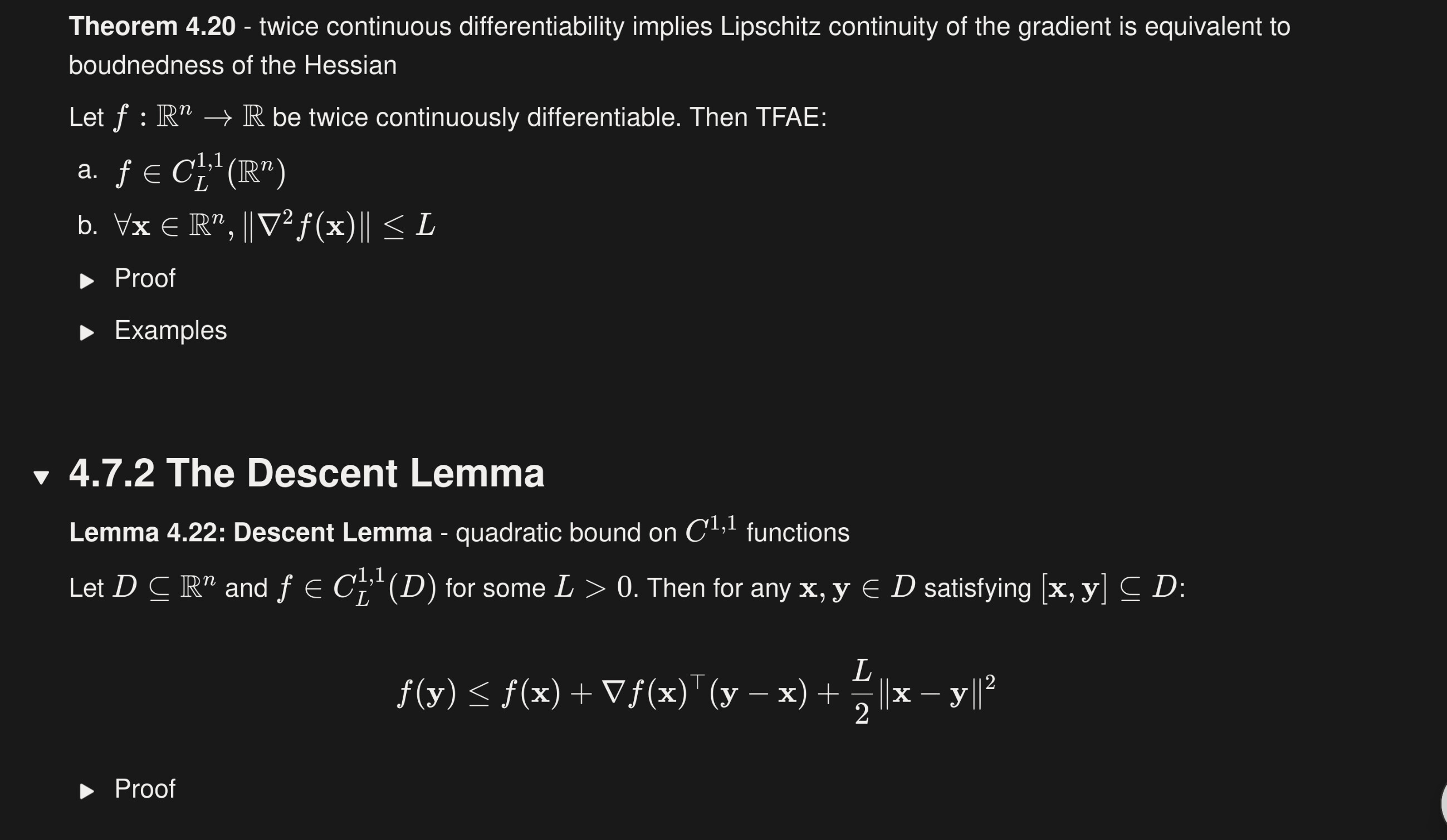
I currently use LaTeX (Overleaf) for assignments and Notion for notes for my math/CS classes. The biggest reason I do not use LaTeX for notes too is that proofs, pseudocode, etc. in LaTeX occupy a lot of space, whereas in Notion I can stick different chapters into different pages, different sections into different toggle headers, and proofs/examples/figures into toggle lists:
This makes it easy to quickly navigate to a specific theorem, while still being able to check the proof or examples if one needs to.
I’ve started playing around with Typst and have been very very impressed at how polished it feels. I’m wondering if it would be able to support toggles and pages like Notion does? Or maybe something that builds atop Typst could offer this kind of dynamic experience?
The WebApp currently doesn’t support folding code. But VSCode supports folding codes (for typst docs, use tinymist). The HTML export might also be an option, although I haven’t used it at all…
And don’t forget, typst is a document writing tool, not a fullfledged notetaking app such as Notion and Obsidian.md ;)
I too would love to use Typst as a notes tool, but it really isn’t designed for that, neither do LaTeX, in my opinion.
Both are typsetting systems to produce professional documents
I think in the future, one developer could turn Typst into a notes tool, i.e., utilize Typst in a notes app.
Meanwhile, you could program a toggle function that shows all content when you set certain parameter to true, and only the heading when you set it to false.
Also, there are toggles supported in the PDF spec, so maybe in the future Typst will support them.